Thursday, August 27, 2009

What your publicist wants you to know

I chatted with a few friendly book publicists yesterday about what works best when it comes to the author-publicist relationship. Here are five simple pointers to get you started.

1. First things first, talk strategy. It's a good idea to start with a timeline for the campaign, a defined target audience and set expectations. Sure, dream big, but remember, Oprah isn't for everyone. If you've watched her recently, you already know she tends to be celebrity-driven. So unless that's you, be realistic in your goal-setting. Rely on your publicist to steer you to your target audience through the most appropriate media channels (even, gasp, new media!) and trust their expertise.Speaking of new media, consider outside-the-box marketing ideas that go beyond traditional publicity. Twitter is one platform many authors are using to creatively network with potential readers, and they're rolling out ultra-savvy campaigns that spur traditional media. This P&P client landed coverage on Jacket Copy, the L.A. Times book blog, for her Twitter Kindle giveaway aimed at promoting her upcoming book Perseverance.

2. When it comes to the "influencer" mailing - you know, all those celebs who "need" your book? - don't leave it to your publicist. That's an ideal project for your assistant, an intern, or even yourself, if you have the time. Allow your publicist to spend her/his time working directly with media, rather than on those media big mouths who may or may not be interested.

3. Hey, fill us in. We need professional (and recent!) headshots, your contact information, and everything that will help us understand how you climbed the ladder to budding author/aspiring artist/sought-after expert. Aside from what we can learn about you on our own and from the book itself, what's your story? We'll be asked, so the more we know about you, the more equipped we are to respond appropriately. Be willing to do some homework like writing contributed pieces, maintaining a blog, and utilizing Twitter.

4. Communicate. If you're not an email person, tell us. Be clear about that early on. I recently dusted off my faxing skills for a client who is still holding out on a home computer. Missed interview opportunities are unfortunate and can be avoided if your communication mode is defined, efficient and most importantly, two-way. Some authors are missing the boat by being unavailable or too selective when it comes to early morning or late night interviews and market size. Allow your publicist to filter the best requests to you.

5. In keeping with solid communication, also trust that your publicist is working on your behalf even when you aren't calling them anxiously. So relax when activity seems to have slowed. Becoming a media starlet or hitting bestseller status isn't an overnight process. An over-eager author can bog down the process when they blow up the phones, duplicate media contact efforts or email assault the publicist. Your publicist can devote several hours a week to crafting lengthy emails that allay your fears... or he/she can be a better steward of that time, using it to pitch media. It's up to you. Stay informed by establishing an efficient reporting method with your publicist so can be sure you are receiving regular, detailed updates.

Think positive. Be creative, accessible, resourceful. And have fun!

Labels: , ,

Thursday, January 22, 2009

The author headshot. Let’s discuss.

When it comes to headshots, we’ve seen it all. There have been writers posed with their animals – dogs, cats, even a tiger. Non sports-related authors in athletic gear on the slopes and courtside. Even shots a la “Glamour Shots by Deb” from Napolean Dynamite. Without the boa or soft camera lens effect, we have to wonder if the author on the dust jacket is the same person.

So if you invest so much in what’s inside the book, why not take just as much care with what’s on the book? Your publicist will thank you for a polished, professional headshot that is message-appropriate. When negotiating national television appearances, publicists are often required to submit a headshot and the quality of that photo – no matter how good looking you are – speaks volumes for your credibility as an author or expert source.


Do you really want that grainy photo of you in a muscle shirt when you still had a full head of hair to represent you as a respected author? Before you say cheese, consider these pointers.

DO:

  • stick with business or business casual attire.
  • add a statement necklace like chunky layered beads or turquoise. Style consultant Sherrie Mathieson, also author Forever Cool, of owns this look.
  • be truthful about your appearance with a recent photo (no outdated shots taken 10 years and 10 pounds ago).
  • invest in a professionally photographed portrait and rely on a prol for the best quality, light and digital quality.
  • offer a variety of expressions and settings. Your publicist can play up your various facets when pitching different audiences
  • match the tone of your headshot to your book’s message.

DON’T:

  • go full body. Remember, it’s a “head” shot.
  • submit photos from vacation or locations where you aren’t the primary focal point.
  • go glam. Present your true self, sans props with current makeup and hair so you are recognizable in appearance and in public.
  • overdo it, ladies. Play up one of your best features (ex. your lips or eyes ), but not both. The rules of makeup application also apply to jewelry – go with a statement necklace or bold earrings, not both.
  • careful to not overwhelm your headshot with bulky scarves and hats.

Labels: , , ,

Monday, January 5, 2009

Book publicist resolutions

It's 2009, book publicists. And while the rest of the world may resolve to quit smoking, visit the gym every day, or finally start recycling, we've got a whole other set of priorities. So what should our resolutions be?

Over at The Book Publicity Blog, Yen Cheong has given us some great ideas. Here's a sampling:

PUBLICITY

"Make sure an author’s web presence is established early, as in, by the time galleys are sent to the media (typically four-six months before a book goes on sale). Depending on the author, “web presence” could mean any or all of the following: website, blog, social networking profile, discussion group, wiki, etc. Whatever it is, get it up there ASAP because while you’re dithering over fonts and flash, readers and journalists are out there Googling the book. In this day and age when basic sites can be created in a few minutes for free, there’s nothing more frustrating than not being able to find accurate information about something."

EMAIL

"Use Reply All — when appropriate. We’ve been conditioned to not use Reply All (with good reason). But sometimes, when I email a producer / writer and copy an author (or vice versa) and the contact only responds to me, I’m left simply forwarding the message. Not only is that a waste of my time, but when time is of the essence, it could lead to a missed opportunity."

For more of Yen's spot-on book publicity ideas, read the full post here.

So fellow book publicists, do you have any resolutions to share?

Labels: , ,

Thursday, November 13, 2008

Two Publicists for the Price of One

Today's post is brought to you by Wendy Kays, author of Game Widow. Wendy recently appeared on the Dr. Phil Show to discuss video game addiction. For more information on Wendy or her book, visit gamewidow.org.

Your publicity campaign is about to start, and you’re feeling a sense of relief. Finally, you’ll be handing all the effort of promoting your book to someone else! Finally, you’ll be on Oprah! Hold on, there, my friend. Before you settle too deeply into your couch of self-content, consider this. What if you could have two publicists for the price of one?

You can maximize your investment in book promotion by being a valuable assistant to your publicist. You don’t need a degree in public relations or marketing to help move your campaign to a higher level. There are five basic things you can do to make the time your publicist spends on your campaign more productive and pleasant for you both.

1. First, gather local press contact information for your publicist. After all, you know your home media best. So make a list of all the newspapers, magazines, and television shows published and broadcast near you, especially ones that cover books or topics in your general category. Then, get online and start visiting the web pages of those media. Look under the “Contact Us” or “To Report Breaking News” links for a phone and/or fax number, or email address your publicist could use. Make note of every contact method you find. If there are editor or reporter names, make a note of both the name, title, and personal contact information of the people most likely to be interested in you or your book. Using a spreadsheet to keep this information neat and easily sorted is best, but what really matters is getting it all down so your publicist doesn’t have to spend hours looking all this up when he/she could be sending out pitches and talking with people who might be interested in your book. Send this list to your publicist, and you’ve just jump-started promotion on a new local author!

2. Next, if you haven’t already done this, create alliances with other people who speak on your topic. Start with the list of celebrity endorsers you approached to praise your book publicly. If your book compliments the work they are doing, you can make an agreement to not only link to each other’s websites, but also to quote, recommend, and mention each other to customers, colleagues, and the press. This doesn’t mean talking about their book or website instead of your own. What this means is using these people as further resources for people who have come to you and are still wanting more. This is how my book, Game Widow, started capturing attention only days after publication. I’m covering a wide and sometimes controversial subject that isn’t well understood, and by working together instead of alone, my allies and I can get more press for our cause: educating and empowering non-gamers in a video game world.

3. Third, create events for your publicist to promote. Book signings are good, but also consider getting online and looking for organizations that would be interested in hearing you speak. Find calls for presenters, and submit your paperwork for groups not based in your local area, and find a contact for local groups to query. Every time you get the chance to appear formally in public as an author, let your publicist know as soon as you do. Make sure you send the name of the event, an address, a contact name and phone number, and relevant details. These details would include whether or not your appearance is to a select audience or the general public, whether it’s a speech only, or if you’ll be taking questions, etc. Even if you’re going to be sitting in a booth at a large fair, let your publicist know in case that information can be parlayed into press space.

4. Fourth, try to do everything your publicist recommends. Create a website, blog, write articles in your area of expertise for newsletters, etc. Don’t think of publicist suggestions as nice ideas, make them priorities on your list of important things to get done right now. If you don’t know how to put up a website or blog, take a class, recruit a friend, or hire someone to help. This may seem like a waste of time and money. But covering all the angles brought me national media attention before my publicity campaign had officially started, and a booking with Dr. Phil three days after publication. Don’t assume this stuff can happen down the road. My website was up, my blogging kept it at the top of the search engine listings, and other experts I linked to also recommended and linked to me. Assume that your publicist knows better than you do, reject advice rarely, and then, only go your own was for solid business reasons. You may know more about your book topic, but even I, with a PR degree, listen to my publicist as the expert before I make any promotional decision.

5. Fifth and finally, put the onus for your success on yourself…not your publicist. As someone once said, when it comes to breakfast, the chicken was involved, but the pig was committed. You’re not just contributing a book to this effort and then walking away, job done. You. Are. The. Product. Be available for questions, get your assignments and e-interviews finished early so you can get to extra credit promo work, and if the media doesn’t flock to your book, think of what more YOU can do. The publicist did everything possible, but may need more to work with. Or simply a little patience as the slow wheels of the media turn toward your offering, hidden among hundreds and thousands of other options. After all, your publicist is not the only one calling Oprah, and books are never breaking news. And some forms of media plan three months or more in advance. Much of the work done now can’t pay off until long after the campaign ends.

No matter how you fare with the media during the life of your book, when you actively contribute to the media campaign process, you put yourself in a better position to keep up the promotion momentum when the campaign comes to an end. You may not be calling or pitching the media now, but you will someday. Helping your publicist in small ways not only builds incredible good will, it also protects you from feeling like an ignoramus three months from now when you learn firsthand how hard it is to push into the news & entertainment cycle…and how good at it your publicist really was. You’ll feel a lot better about yourself, then, if you work hard and treat your publicist with respect now.

--Wendy Kays

EDITOR'S NOTE: To watch a clip of Wendy on The Dr. Phil Show, click here.

Labels: , , , , , , ,

Monday, July 28, 2008

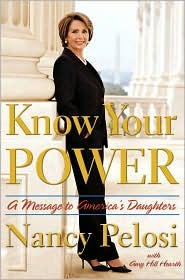
Nancy Pelosi's book competition

Speaker of the house Nancy Pelosi is running a pretty killer book tour right now. In a single morning, she's appeared on "The Today Show," "The View," and NPR, with an evening spot tonight on "The Daily Show with Jon Stewart."


While many are familiar with Pelosi's historically significant stature as the first female speaker of the house, this book explores a side of Pelosi we aren't as familiar with - a 47-year-old stay-at-home mom with five kids, who despite her devoutly Democratic upbringing, had no idea she would one day enter politics.

At press time of this blog post (i.e., quittin' time on a Monday afternoon), "Know Your Power" is currently ranked at #308 on Amazon.com. It's #3 in the "Government" category. So, who's her competition?

#2 is no surprise - Scott McClellan's tell-all memoir, "What Happened: Inside the Bush White House and Washington's Culture of Deception." Shocker. But #1, you ask?

Why, that would be "Government Pirates: The Assault on Private Property Rights--and How We Can Fight It," by Don Corace. It's an insiders look at eminent domain abuse. It's ranked #126 overall right now!

Is it because Don Corace is a bigger rockstar than Nancy Pelosi? Well I guess that's a matter of opinion - but it's safe to say Pelosi is more of a household name, I mean, right? For these conditions, we undoubtedly have another hardworking book publicist out there to thank: a publicist who booked Don Corace on Fox News' "Hannity & Colmes" last week.

So, to Don Corace's publicist, wherever you are - hats off. That's a prominent booking, and your author has some impressive book sales to show for it.

Labels: , , , ,

Wednesday, July 16, 2008

Wisdom from the Chicago Tribune: Get personal with journalists

Book publicists - heck, all publicists for that matter - walk a hard line. On the one hand, we want to be friends with key media contacts. On the other hand, we don't want to annoy our key media contacts. Why? The more friendly, and simultaneously less annoying we are, the more chance we have of landing solid media coverage for our authors and books. So no better way to start that friendly-but-not-annoying-friendly relationship on the right foot than a cheerful, non-invasive email, right?

WRONG. Let's hear it for the Chicago Tribune (and the Bulldog Reporter, who ran this piece earlier this summer) who eloquently dispels this line of thinking. Publicists: be ye not afraid of the telephone. We're talkers. Let's reach out and touch the media via some phone calls and meetings, shall we? Here's more:

"An email followed by a telephone call really is not the best way to go if you want to get our attention," says Michael A. Lev, business editor at the Chicago Tribune (circ. 957,212). "Instead, I think the way to stand out is to make a call and leave a message first—and then to follow up with your email. I have the same counterintuitive advice for sending materials," he adds. "A press kit followed with a call will be remembered. But an email is just too easy to skip over or delete."

His larger point: "Email or anything on its own isn't strategy—it's a gamble. But tying a phone call to it makes it more than a shot in the dark. A call just makes it more personal"––especially in light of today's spray–and–pray email campaigns. That said, "Journalists want their relationships with PR people to be as concise and focused as possible," Lev stresses. "If you get us on the phone or leave a message, keep it very brief. If you don't hear back, assume it wasn't relevant. We'll get back to you if we're interested." His additional tips:

• Afternoon deadlines are dead—pitch breaking news around the clock. "We are all doing much more with less. We have gone through buyouts—and staffs aren't as big as they used to be. On top of that, we all break news on the web now—at least, we're teaching our reporters to do that. Everybody is trying to develop that new muscle memory—breaking news around the clock," Lev says. "We'll post an alert and it'll just be three graphs on the web. Then we'll follow up with a more in–depth story on the second day." His advice: "Recognize we're on deadline all day—not just in the afternoon anymore. Also, recognize what gets play online and in print—and pitch accordingly. For example, don't pitch the breaking news item for the next day's paper."

To read more tips, including the power of the in-person lunch as well as the power of exclusivity, see the full story.

Labels: , , , , , , ,

Tuesday, July 8, 2008

Fatal Flaw #2: Saturating contacts

Making the most of the author-publicist relationship

In our continuing series on Fatal Flaws, we want to examine a commonly-held misbelief today: saturating contacts. What exactly do I mean by that?

Some authors think that if their publicist simply got his or her name out to the media, every single day, then surely the media would respond! I mean, how could CNN, The Today Show or Oprah ignore daily email reminders that you are THE definitive source on the economy/presidential elections/peregrine falcons?

Easy: those emails will never see the light of day. Why? Our media contacts will stop reading our emails, or answering our phone calls for that matter, if we're grating on their last nerve.

Asking your publicist to contact the same media contacts over and over again with breathless pitches about your expertise does two very bad things:

1. It threatens your publicist's relationship with her media contacts.

The reason why you, the author, have hired a publicist is because of her ability to create relationships with the media. She wants to help these people do their job - report the news - as much as she wants to help you get exposure. So don't ask her to contact the national top morning shows every day, or even every week, with new spins on your credentials. This hurts, rather than helps the cause. What the media wants from us are key sources at key times, and it's timing, rather than spamming, that will ultimately garner you media bookings.

2. It closes off other really cool publicity opportunities.
If you ask your publicist to constantly call/email the same type of media contacts - let's say, lifestyle editors at the top ten news dailies - then that's time she could have spent contacting other media outlets and journalists who don't know your name yet. Case in point: a parenting expert we worked with here at P&P wrote us a contributed article on airplane travel with kids. Sure, we could have pitched that to family editors, who likely get similar pitches all the time. Instead, we tried travel editors - and got that story placed in the New York Daily News. The lesson here? Trust your publicist to know where your main media potential is - she'll keep following up with those contacts, don't you worry - but always help her think of new and different shows, publications, editors, etc. that might want to hear your message too.

Labels: , , ,

Thursday, July 3, 2008

Part One: Fatal flaws of authors

Making the most of the author-publicist relationship

Good stories and fatal flaws are synonymous. Just as long as the fatal flaw isn't yours and doesn't rear its head during the media campaign, right?

At the core of an effective book publicity campaign is a good working relationship between author and publicist, a partnership. To help you get the most out of yours - ensuring your publicist is in your court, is a champion for your cause and has a good rapport with you and your camp - we'll post a five-part series this week unveiling the most common "fatal flaws" of authors.

Fatal flaw #1: Overcommunicating.
Some clients need a little extra hand-holding and that's ok. (Don't we all sometimes?) The author should be in the know and it is our job as professional communicators to communicate plans, progress and feedback from media. So communication is key, but overcommunicating can be fatal.

Your publicist is likely serving multiple clients so 30 minute chats here and there can add up. Over-the-top client communication can, when compounded, detract from pitching time. So how do you strike a balance between keeping the lines open and over-the-top?

Here are some starters:
  1. Don't bog your publicist down with voicemails liek "This is Jane Doe, please call." Leave details on the voicemail so your publicist is clear on the nature of your need.
  2. Rather than shooting off several short emails from your Blackberry, compile your thoughts for the day into one email, in bullet form so you can be sure all your questions are addressed.
  3. Set up a regular weekly call with your publicist to discuss plans and set goals.
  4. Make sure your publicist has a dependable method for reporting on a regular basis.
  5. Don't worry about calling to see if the producers from the national morning shows called back to book, we'll call you.

Stop by tomorrow for fatal flaw #2, saturating media contacts.

Labels: , , , ,

Wednesday, April 30, 2008

"I getz book deel? KThanxBai!" When Web sites become books

Sometimes, all it takes is a quick flash of inspiration to end your spell of writers block and get your book picked up by the ever powerful traditional publisher. Other times, all it takes is maintaining a Web site with pictures of cats and other small critters speaking broken English in block letters to land you a deal (bear with me, this is post is a legitimate one-I promise).

A few posts ago, Stephanie Mayabb talked about the recent rash of movie studios pulling inspiration from literature to fill the seats at the local cinema. Though blogs have been the source of book deals for years, I’ve noticed several, um, unique blogs being tapped by top publishers recently. Take a look:

LOLCats:

The LOLCats Web site presents several photos everyday of cats and other animals speaking “Kitty Pidgin”. I won’t get in to the linguistics of it all, but the sentences surprisingly make sense and animals are just so darn cute. The owners of the photos take pictures of their pets and then superimpose little sayings in block letters on them. It sounds insane, because it is, but the Web site has taken off and garners thousands of unique visitors each day. The site has even been featured in Business Week, TIME and the Wall Street Journal. Early this year, the proprietors of the LOLCats juggernaut secured a book deal with Gotham Books. The book will feature pictures from the Web site and will be narrated by Professor Happycat. You just have to check out the site to see what I’m talking about.

Postcards from Yo Mama:

Yesterday, GalleyCat and the site owners made the announcement that this blog will be the next to become a book. Another favorite of mine, Postcards From Yo Mama features reader submitted e-mails from mothers. My favorites are the IM transcripts. The blog definitely reminds me of the short-lived period during which my mother and I tried to communicate via IM.

Extreme Pumpkins:

For those of you who take pumpkin carving seriously, this is the Web site and book for you. The guide to jack-o’latern carving has been wildly successful. Released by Penguin in September 2007, it’s currently on its third printing and has sold over 10,000 copies. Author Tom Nardone made a bevy of high profile media appearances and you can track the book’s success here. I’m not precisely sure what order the Web site and book deal came in, but I can say I know that I’ll never carve a lame pumpkin for Halloween again.

And in an alternative to goofy coffee table pieces, books with more serious topics that were borne from blogs and Web sites have made waves as of late. The best example I can think of is the PostSecret project. The project began as an art exhibit in 2004 in Washington, DC. Creator Frank Warren launched the blog on January 1st, 2005 at Blogspot and presently uploads 20 new postcards with secrets to the blog every Sunday. Since the project launched, Warren has published several books packed with secrets from people around the world and the blog won Weblog of the Year for 2007.

Labels: , , , , , , , , , ,

Tuesday, April 22, 2008

Paging Sloane Crosley


If you are at all involved in book publicity, chances are you've heard of Ms. Crosley, and her recently-released book, "I Was Told There'd Be Cake."

By all accounts, it is a delightful collection of essays surrounding the mid-20's experience. It is published by Penguin. She herself is a book publicist in New York, is buddies with Candace Bushnell, and has dated Moby. Oh, and she sometimes moonlights for The Village Voice.

God I hate her.

Kidding! In fact, Sloane Crosley seems not only nice, but worth modeling ourselves after, if you're a publicist. Here is what Lockhart Steele (what a name!), former managing editor of Gawker, had to say about Sloane:


“[Sloane is unique] among media people. You deal with so much b******t from people and so much b******t from publicists trying to tell you this is great or this is the next great American novelist.”

And Leon Neyfakh in the New York Observer:

"Ms. Crosley, by comparison, cuts to the chase with editors and writers, and conscientiously tailors her pitches to suit their tastes. In other words, where publicists of all kinds—for movies, books, socialites and dentists—have created a giant wall of noise, Ms. Crosley manages to be heard above the racket, recommending her writers and titles to others with a gentle caress instead of a swift kick."

First of all - dentists have publicists?

Second - Sloane sounds like a fine example of the publicist who has transcended all publicist stereotypes. You know the ones I'm talking about. Loud. Chirpy. Substance-less. Hooray for Sloane for giving book publicists a good - nay, aspiration-worthy! - name.

But here is the number one thing I want to point out about Sloane. And it isn't the fact that her parents apparently named her after Ferris' girlfriend in Ferris Bueller's Day Off.

When Sloane is not a publicist, she is an accomplished writer.

Leon again:
"Like a lot of book publicists, [Sloane] has wanted to be a writer all along. She majored in creative writing and did summer internships at Mirabella and The New Yorker. When she graduated and moved to New York in 2000, she did so with the intention of finding a job at a magazine."

Oh Sloane! I see myself in you!

Publicists, how many of us out there secretly yearn to see our name in bylines? On books? Just like our authors!

I think it's worth it for all of us to have a side writing project, outside of book publicity - even if it's a private diary that no one else sees, or a LiveJournal account you maintain under a teenage pseudonym (imagine everyone's surprise when GrrlSuperstar1992 publishes her first novel!). Perhaps the reason everyone, from media to authors, looooove Sloane Crosley is very simple: she is also a writer. She knows what writers want - authors want to be understood, media wants good stories.

So book publicists, can you hear me? It's time to join ranks with our author clients. Sloane Crosleys or not - it never hurts us to be better writers.

Labels: , , , ,

Tuesday, March 25, 2008

Re: You stole my subject line

When email subject lines make headlines

A colleague slid a section of a well-respected newspaper under my door this morning. Glaring back at me in boldfaced, all-caps letters is the same subject line of my recent email pitch now posing as an above-the-fold headline! The reporter’s name sparkles in the byline, under said headline. Gasp! What’s more is that this story appears in the very newspaper that stands at the pinnacle of every literary publicist’s daily aspirations! Unfortunate? Yes. Unusual? Not really.

Along the same lines, it’s not an anomaly to see a publicist’s hand-crafted pitch copied and pasted into a query of a ProfNet feed. And since we’re in the business of generating story ideas, I suppose what can be taken from such experience is one part missed opportunity and two parts accomplishment for being right on the money.

In thinking about where I stood on the matter, I polled several publicists in the industry to find out the consensus on “ideas on loan.” The result was a mixed bag: reactions tended to be a little slighted, but a little complimented, too.

One publicist called attention to the fact that the situation, more often than not, tends to backfire with the client. “What’s worse is when my client sees the story and says, ‘Why wasn't I in this one?’” She said, in such case, she wished she could respond to the tune of “well, they liked the idea, just not you in it.”

On flattery, in a sort of round-about way, another publicist said, “Hey, the media is totally using my ideas! It's a sign that my media instincts are on-target and in-line with the reader. But I also feel frustrated - you stole my ideas, media! And worse, you didn't use my fabulous source! ”

What’s a publicist to do about all the idea high-jacking? Well, in a word, nothing. The borrowing of ideas is just part of the biz. There’s an ebb and flow and a give and take with media that seems to balance out over time. One publicist compared her relationship with media to that of a sibling, “someone who steals your socks, the last of your cereal, or even your diary, but ultimately, no one’s to blame - you can’t live without them.”

Labels: , ,

Wednesday, January 23, 2008

Thanks for striking, writers!

The ongoing WGA strike may be bad news for TV, but as it turns out, it could rain down good things on book publicists.

Ok, just like everyone else, I’ve grown weary of reruns. My DVR is hungry for first run episodes of my favorite shows (thank you LOST, whose 2-hour season premier is Jan. 31), but I’m starting to warm up to the idea that here in the land of literary publicity, this deadlock in negotiations might just work out in our favor. The strike may a golden opportunity for us.

Take for instance, my client Traci L. Slatton, author of Immortal (Bantam Dell/Jan. 29), an epic “rags-to-riches to burnt-at-the-stake” work of historical fiction about an orphaned boy in Renaissance Florence. Traci landed a spot on the Sundance Film Festival circuit – if you happen to be strolling Main Street in Park City tomorrow, email me for the inside scoop on her reading.

With a portion of the entertainment industry crippled, Traci has received higher than anticipated press coverage at the film-driven festival. There’s also been talk by the BBC that the strike has brought more distributors and buyers than normal to the festival. Eleven weeks into the strike and news of possible breakthroughs, I’m actually hoping for a few more weeks of negotiations.

So, thanks to a darkened Hollywood, authors like Traci are reaping the benefits of the otherwise unfortunate writer’s strike, turning the heads of TV news-starved entertainment reporters who normally wouldn’t include literary headlines on their daily beat.

Labels: , , , , ,