Friday, March 14, 2008

Phenix & Phenix interviews Raz Godelnik, Co-founder and CEO of Eco-Libris

Eco-Libris is a great green business dedicated to making the publishing industry more environmentally friendly. They are proponents of "sustainable reading" and their mission is perhaps best summed up by their tag line: "Every book you read was once a tree. Now you can plant a tree for every book you read". Raz was kind enough to let us grill him about green efforts in the publishing industry:

Q: So, what is Eco-Libris? What do you mean by “sustainable reading”?
A: Eco-Libris is a green business that works with book readers, publishers, writers, bookstores, and others in the book industry to balance out the paper used for books by planting trees. About 20 million trees are cut down annually for virgin paper to be used for the production of books sold in the U.S. alone. Eco-Libris raises awareness to the environmental impacts of using paper for the production of books and provides book lovers with a simple way to do something about it: plant a tree for every book they read.

Sustainable reading, as we see it, is when books won’t have environmental impacts and that the process of their production will be done in a manner that can be maintained indefinitely without endangering our natural resources base. This is definitely far from the state we have today, when so many trees - one of the most precious natural resources, are being cut to sustain the growth of the book industry, not to mention the energy consumed in the process and the pollution it produces. In Eco-Libris, we offer the first step to make reading more sustainable. We believe it is of the outmost importance to emphasize the direct connection between the paper consumed in the industry to the trees that are being cut down, and we offer a direct action.

Q: What was the inspiration behind the organization?
A:
For me it all started when I was thinking about paper and the environmental impacts of its production. I realized that it might take a while to get to the point where eco-friendly alternatives (such as the use of recycled paper) will replace virgin paper. Then, I talked with some friends about the idea of giving people the opportunity to balance out their paper consumption by planting trees and received good feedbacks about the idea.

The decision to focus on books was made after learning that only less than 10% of the paper used for printing books is made of recycled paper and because most books don’t have yet an online eco-friendly alternative, like magazines and newspapers. So, if you want a book, you usually can’t avoid purchasing the paper-made version. You also can’t tell people to stop reading books, because books are such a wonderful thing and an important part of our life, so it seemed to me only natural to offer book lovers a new alternative to make their reading greener--planting trees for the books they read.

Q: Just how much paper is used annually to print books?
A:
According to the Environmental Trends and Climate Impacts Report that was published this week by The Book Industry Study Group (BISG) and Green Press Initiative (GPI) more than 1.5 million metric tons of paper are used annually for producing books in the U.S. In terms of trees, we talk about 20 million trees, if not more, that are cut down to produce the paper.

Q: Is it enough to print books on recycled paper? What is a “certified forest” with reference to “virgin paper”?
A:
Shifting to using of recycled paper is not the only step that should be taken, but it’s probably the most important one. Not only that you contribute by taking this step to cutting down less trees, you also support the fight against global warming – let’s not forget that deforestation, because of the release to the atmosphere of the carbon that is stored in trees, now accounts for about 20 percent of the world’s greenhouse gas emissions.

If any virgin paper content is still used for printing, using paper that is coming from certified forests is very much recommended. There are few certification programs and the best one is considered to be the Forest Stewardship Council (FSC). Using paper with FSC certification ensures that paper does not originate from trees in endangered forests, that the forests it is derived from were not converted to single-species tree farms after harvest, that the biodiversity and the resilience of ecosystems is maintained, that concerns of indigenous and local communities are integrated into the forest plans, etc.

Q: Would you say that the publishing industry has been an “un-environmentally friendly” organization in years past?
A:
Let’s start with the good news - you can see a change in the publishing industry in the last couple of years, especially ever since Random House announced in May 2006 that it will raise the proportion of recycled paper it uses to at least 30% by 2010 from under 3% at the time of the announcement. We see more publishers involved in green initiatives and there are around 150 publishers that signed a treatise initiated by the Green Press Initiative, which supports more use of recycled paper and FSC-certified paper.

Yet, there is still a lot more to be done since the starting point of the industry is very far from being sustainable. The book industry (and it is the same with many other industries) didn’t deal with its environmental impacts for many years. Now it starts this process, but I really would like to see it moving faster and greener. We know many eco-conscious readers are looking forward to that.

Q: Where are the purchased trees planted?
A:
Eco-Libris partnered with three highly respected U.S. and U.K. registered non-profit organizations (http://www.ecolibris.net/partners.asp) that work in collaboration with local communities in developing countries to plant these trees. These trees are planted in high ecological and sustainable standards in Latin America (Nicaragua, Guatemala, Panama, Belize, and Honduras) and Africa (Malawi) where deforestation is a crucial problem. Planting trees in these places not only helps to fight climate change and conserve soil and water, but also benefits many local people, for whom these trees offer many benefits, such as improvement of crops and additional food and income, and an opportunity for a better future.

Q: What can publishers, authors and literary publicists do to participate in the cause?
A:
There are many ways to collaborate with us. Here are few examples - Kedzie Press, an independent publisher out of Seattle are using the Eco-Libris logo on their new books' cover design and pledged to plant a million trees with us by the end of 2009, Process Media from LA plant a tree with us for every book they sell on their website, Authors like Mira Tweti and Mary Kearns offered our stickers at launch and signing events of their books, planting a tree for every book sold. We will be happy to speak with anyone in the industry that want to go green – to receive further information just send us an email to bd[at]ecolibris[dot]net.

Q: What results have you seen from participation in this program?
A:
Within only 8 months of operations we have balanced out more than 24,000 books which results in more than 31,500 new trees being planted! This is really great and we’re very proud in that, but it’s only the beginning and we intend to keep working hard to meet our goal: balancing out 500,000 books by the end of the year.

Besides that, we managed to raise awareness to these issues within authors, bookstores, online communities of readers and many others that collaborate with us. We feel that we help to increase the understanding to the need to go green both on the demand and supply sides of the industry and even more important – drive them into action.

Q: What advancements in environmentally friendly technology are you most excited about right now in the publishing industry?
A: I am very excited from the work on producing synthetic paper in a cradle to cradle manner, just like the book ‘Cradle to Cradle’ itself. As the authors William McDonough and Michael Braungart explain in the book, it is made from plastic resins and inorganic fillers – it’s waterproof, extremely durable and recyclable by conventional means. Above all – it can be broken down and circulated infinitely in industrial cycles made and remade as paper and other products. In other words: sustainable.

Q:
What other environmentally friendly suggestions do you have for readers? Do you have any tips for industry professionals like P&P?
A: For eco-conscious readers there are many steps that can be taken to go green such as:
  • Joining the local library.
  • Frequent more used book stores. It's cheaper and much more sustainable.
  • Support book publishers who print on recycled paper.
  • Check out bookmooch.com for worldwide book swapping.
  • And support book publishers and writers who partner with Eco-Libris (you can see a list on this page: http://www.ecolibris.net/business_opp.asp)

Industry professionals can also take many steps to green their operations and business–starting from reducing the energy consumption and paper use in the office to greening their purchases and buying locally. When you buy recycled paper or envelopes made of recycled paper–look for local businesses that sell it and support them. From my experience, as members of the Sustainable Business Network of Greater Philadelphia that buy our office supplies from a local green business, not only that it’s better for the environment and supports the local economy, it’s even cheaper.

-
For more information on Eco-Libris, please visit their website. To check out our thoughts on going green, please visit the Eco-Libris blog. Many thanks to Raz Godelnik and the folks at Eco-Libris!

Labels: , , , ,

Monday, November 19, 2007

What the “It Girl” Knows: The Power of Charm


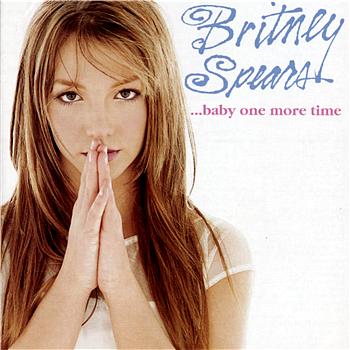
There’s a reason Britney Spears is still the name on everybody’s lips.

No, she’s not the model of parenting. Yes, she has a well-documented substance abuse problem. But for her fans – of which there are still legions – this is a time of mourning for the Southern success story Britney Spears once was. Say what you will about her music, but girl knew how to give an interview. Don’t believe me? Observe:

http://www.youtube.com/watch?v=QWjXCq40Ds0&feature=related

Engaging. Self-deprecating. Plenty of laughter, smiles, and polite thank-you’s for her companion, Rosie O’Donnell (and enough charm to make up for that outfit, no?). Ultimately, Britney knew this truth of artists: in an interview, it is not your product you are selling. You are selling yourself.

PR professionals know this all too well. Here at Phenix & Phenix, we train our authors to give interviews that are compelling, to-the-point, and memorable. But of all the pointers we offer – mention your book title this many times, always use a landline telephone for phoner interviews – I think the most important tip for any author is simply this: charm your reporter.

Easier said than done, I know. But the reason I believe rapport-building is so crucial is that I used to be a reporter myself, and the sources I enjoyed speaking to most – indeed, returned to time and time again for stories – were the ones who made me laugh, were polite, interesting, asked me about my day, etc.

The advice is somewhat self-evident. However, I want to share two stories with you from a reporter’s point of view that will hopefully illustrate my meaning.

In college, I interviewed a very esteemed author for my school newspaper. Now, this is an author who has published 35 novels and 30 short story collections, is the recipient of a Pulitzer and a National Book Award, and has a hallowed place in Oprah’s Book Club: in other words, a freak of intellectual nature. So she doesn’t exactly need the media anymore (and certainly not the Southwestern Megaphone) to increase her fame. And it’s a good thing for her. Because as an interview subject, she is beyond terrifying.

Me: So! Tell me about your new book.
Very Esteemed Author: I thought you had read it.
Me: Oh, yes, I have – um, almost finished! – but for our readers…
VEA: I did very little research.
Me: On the book’s subject, Marilyn Monroe, you mean?
VEA: (Withering tone) Yes.
Me: Huh! Isn’t that something. So what inspired you to write about Marilyn Monroe?
VEA: Are you a runner?
Me: Pardon?
VEA: RUN. DO YOU RUN.
Me: Oh, uh, yes…from time to time I like a good run. Um, how about you?

…And it only got more awkward. That is because this author’s genius is so large that she is not a mere mortal who speaks like mere mortals do. Anyway, I was happy to finish the interview early, write my story, and never get back in touch with her again for a follow-up interview. Yikes.

My second story does not involve an author, but a tattoo artist named Bob. Bob runs a small tattoo studio here in Austin that’s been around since the 70s, and is world-famous among industry types. When I walked into his shop, he immediately invited me to take a seat. Asked me how I was doing, offered me tea. Before I knew it, an hour had passed, and what was supposed to be an “interview” turned into an intimate conversation in which Bob told me funny stories from his life, listened to my questions as if they were the most fascinating queries ever posed, laughed often and heartily. He was authentic, he was kind, he was utterly charming. I loved talking to him.

By the end of our interview, I felt so comfortable with this man that I did the unthinkable (for me, anyway): I asked Bob to give me a tattoo. My first.

As an author, it’s obviously not tattoos you’re selling, but your book. Likewise, when the “It Girl” of the month makes her rounds to Conan, Regis & Kelly - all the hot exposure stops – you’ll notice she spends just a fraction of the time talking about her latest movie/CD/signature fragrance, and more time just being generally pleasant while answering the interviewer’s questions. This is tough to do when you are Paris Hilton, you’re launching a new perfume, and all David Letterman wants to discuss with you is…jail food. And jail outfits. And like a champ, she indulged him.

Here at P&P we emphasize the importance of using supporting statistics during your interview, as well as frequent mentions of your credentials, along with other tips that are absolutely helpful. But for the example at the tattoo parlor, I was actually there to interview someone else – a different artist at the same studio – and I ended up writing the story using mostly quotes from Bob because he was more fun to talk to.

So my #1 Interview Tip is this, authors: get thee to Charm School. To get on a reporter’s good side, it’s not just your book you’re selling. It’s you.

Labels: , , ,

Tuesday, October 30, 2007

Wait, did you say pre-interview?!


You just arrive home from picking the kids up at school and the light is blinking on your answering machine. As you start to listen to the message you realize it is your publicist—you know she’s been working hard to get the message out but you are sick and tired of writing contributed pieces. She warned you before the campaign started that it was going to be time-consuming but she’s working you like a dog and you just can’t churn out another article this afternoon.

As she begins her message the tone of her voice let's you know she’s excited: "Just wanted to give you the news that my contact at NPR has finally got back to me and...they’re interested!"

Yes! Terry Gross here I come, you think. You begin planning the afternoon—your agent will be thrilled with the national interview and the other members of your writers group will be so jealous. In your haste to cheer with friends you almost miss the catch at the end of the message.

Hang on, did she say “pre-interview?” Gulp.

Authors and publicists have been dealing with the dreaded pre-interview for years. It is a mainstay of the most high profile national broadcast programs, including several NPR shows, national morning shows like “The Today Show” and “Good Morning America,” syndicated daytime programs like “The Montel Williams Show” and many others.

Producers for these programs love pre-interviews because they allow them to make sure the potential guest can communicate entertaining and informative information to their audience. Authors hate pre-interviews because they know in the back of their minds that they are auditioning for the biggest interview opportunity of their career. I have seen authors get more nervous for this preliminary conversation than the interview itself.

The good news? Programs like these will only schedule a pre-interview if they are genuinely interested in having you on their program. Most authors who go through media training and are prepared to communicate their message effectively do very well in pre-interviews.

The bad news? You may never know why you did not get the interview slot but often the writing is on the wall. If your publicist knows that Kyra Phillip's producer is looking for a guest to talk to her about social networking websites in the two o’clock hour and tunes in the next day to see another “expert” featured, they know the pre-interview did not go well. Sometimes producers conduct several pre-interviews and pick the author or guest they think will bring the most to the interview. Often it does not mean that you did anything wrong but rather another interviewee had the perspective they were looking for.

What can you do to prepare for pre-interviews?

- Know your material. Your publicist will spend time prepping you on the pitch that secured interest from the producer. Make sure you know the subject matter backwards and forwards by having statistics, anecdotes and suggestions ready to go.

- Have an understanding of the angle they want you to take. Often producers are preparing a segment with opposing viewpoints and you need to be ready to back your argument to the fullest. Do not waffle on an issue during the pre-interview if you know they are expecting a strong take.

- Practice. Your publicist will be interested in prepping you for the pre-interview but also ask a friend or family member to run through a Q & A with you. Ask for honest feedback on your performance.

- Do your homework. Think like a producer as you prep for the interview. What market are they trying to reach with their program? If the show is geared for stay at home parents, leave the workplace issues out of the picture.

One thing to always remember if the pre-interview does not lead to an immediate booking is that there are always future opportunities. A great example is a client of ours, Lynette Lewis. A renowned motivational speaker in the corporate community, Lewis’ career self-help book Climbing the Ladder in Stilettos: 10 Strategies for Stepping Up to Success and Satisfaction at Work was released by Thomas Nelson in October 2006. The combination of timely tips, a positive theme and a credentialed author gave our publicity team plenty to work with. The campaign was very successful, resulting in great attention from top 100 dailies, internet outlets, and numerous radio opportunities.

The one that got away during the campaign was a pre-interview with “The Today Show” that did not end up in an appearance during the holiday season. We knew from working with Lewis that she had a lot media savvy and we remained confident that it would turn into something down the road. We got word late last week that her pre-interview had finally paid off, as she was kept in the producer’s file as a “women’s career expert” and appeared on the program yesterday. That’s right, nine months after her preliminary interview.

Pre-interviews are a part of the process for most major national media outlets and if your publicist is able to attract attention on that level, it is very important to be prepared for that opportunity. If things do not work out right away, remember that a good pre-interview may turn into additional opportunities for you down the road.

Labels: , , ,